Background Verification Services: Building trust and reducing risk in modern organizations
Hiring shouldn’t feel like walking into a dark room with your hands out. Yet that’s what it becomes when checks drag on, rules get ignored, and onboarding stalls. Every delayed start date costs time. Every unchecked claim can turn into legal, financial, or reputational damage.
That’s why background verification services matter. They help you stop hiring blind. They give you verified facts you can stand behind, even when you’re hiring across borders, under pressure, and with regulators watching. In simple terms, they confirm identity, confirm claims, confirm legal eligibility, and leave you with a record you can defend.
Table of Contents
- The growing importance of background verification services
- What background verification covers in real life?
- The employment verification process
- Employment screening services and pre-employment screening
- Education credential verification
- Criminal background screening and criminal record checks
- DBS check services (UK)
- Identity document verification
- Address verification services
- Right to Work checks
- How does global background screening work in a borderless world?
- What slows checks down and how to avoid it?
- How DE RISC Group run background verification?
- Frequently asked questions
- Related services from DE RISC Group
The growing importance of background verification services
Background verification services are structured processes used by organizations to confirm the accuracy of identity, employment history, education, and legal eligibility before making critical decisions. They help organizations reduce financial exposure, meet compliance needs, and prevent operational disruption.
That’s why background verification has become a foundational element of responsible hiring and onboarding as organizations seek to reduce risk, protect their reputation, and ensure the accuracy of workforce information. With increasing regulatory oversight, rising instances of credential fraud, and the expansion of remote and cross-border workforces, verifying identity, qualifications, and legal eligibility is no longer a procedural formality but a critical safeguard for operational security and compliance.
What background verification covers in real life?
Background verification isn’t a single check. It’s a set of checks tied to a decision. Hiring a finance manager isn’t the same as hiring a short-term contractor. Onboarding a tenant isn’t the same as onboarding a vendor. The core idea stays the same. Confirm identity. Confirm claims. Confirm legal eligibility. Then document what you checked, when you checked it, and what you found.
That last part matters more than most teams expect. When a dispute happens, the “paper trail” stops panic. It shows you acted with care and within the rules. For context on why stronger controls matter, the UK Office for National Statistics reports that the Crime Survey for England and Wales estimated around 4.1 million fraud incidents in the year ending June 2025: https://www.ons.gov.uk/peoplepopulationandcommunity/crimeandjustice/bulletins/crimeinenglandandwales/latest
The employment verification process
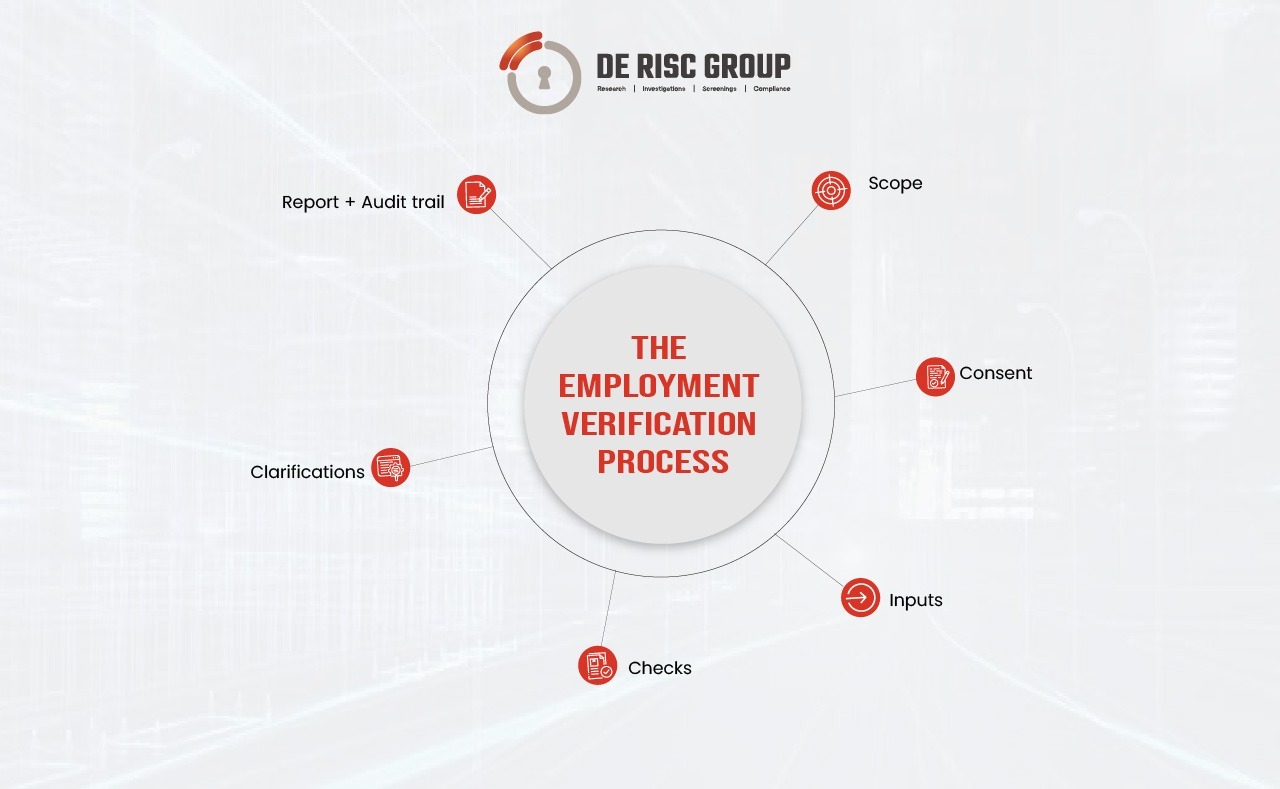
A strong employment verification process starts by setting scope. You decide what you must verify based on the role, location, and risk level. That keeps screening relevant and stops delays caused by unclear requests. Next, you collect the right inputs. Clean identity details, accurate dates, and complete employer or institution information save days. Then checks run against appropriate sources, and each step is recorded. If a mismatch appears, a controlled clarification step follows. You request clarification, log updates, and keep decision notes. Then you issue a report that shows outcomes, exceptions, and timestamps.
Employment screening services and pre-employment screening
One of the most common and critical applications of background verification is employment screening services. Hiring the wrong candidate can result in poor performance, workplace misconduct, or compliance violations. Most risk shows up early. That’s when new hires gain access, meet clients, and touch systems. Pre-employment screening helps confirm key claims before onboarding completes.
Think of it like checking a bridge before you drive a truck across it. If you skip the checks, you might cross once. Then the bridge fails when it matters.
If you want role-based checks that don’t stall onboarding, start with Employee RISC Assessment.
Education credential verification
Education claims look simple until you try to confirm them across systems, regions, and timelines. Institutions respond at different pace. Names can differ due to spelling changes or local naming formats. Education credential verification checks that the qualification exists and matches what the candidate claimed. It’s one of the fastest ways to spot resume inflation, because education is easy to claim and hard to fake well.
When a mismatch appears, strong reporting keeps it clear. It states what matched, what didn’t, and what evidence was missing. That helps hiring managers act on facts, not guesses. If you hire at scale, this check protects you from repeating the same mistake across teams. One false claim can slip through. Ten false claims can turn into a pattern.
Criminal background screening and criminal record checks
Criminal checks can carry real legal limits. Scope depends on local rules, role type, and what you can lawfully request and use. That’s why criminal background screening service needs control, not guesswork. When you run criminal record checks, clarity matters. What jurisdiction applies? What record type applies? What role risk justifies it? If the answer isn’t clear, the check can create risk instead of reducing it.
A practical approach keeps the check role-based. It also keeps decisions documented. If a result appears, you log what it means for the role and what policy applies. That protects your team from inconsistent handling. For cross-border hiring, this area gets more complex. Data access differs by country. Rules differ too. A global provider needs local handling while keeping one standard for your internal review.
For official guidance, UK employers can refer to the government’s DBS guidance on employer criminal record checks: https://www.gov.uk/dbs-check-applicant-criminal-record and the ICO’s recruitment and selection guidance on handling candidate data lawfully: https://ico.org.uk/for-organisations/uk-gdpr-guidance-and-resources/employment/recruitment-and-selection/.
DBS check services (UK)
If you hire in the UK, DBS check services may apply to specific roles, based on eligibility criteria under UK rules. This is common in roles tied to regulated work, sensitive environments, or vulnerable groups. DBS checks require clean candidate inputs and correct role eligibility. If the role doesn’t meet criteria, the request can fail or cause delays. That’s why role scoping matters before the check starts.
A good DBS workflow sets expectations early. What level applies. What documents the candidate needs. What timelines are realistic based on current processing conditions. Your team also needs a clear record that shows when the check started and when the outcome arrived.
Identity document verification
Everything rests on identity. If identity is shaky, every other check becomes less useful. That’s why identity document verification should happen early, not after days of effort. Identity checks confirm that the person matches the documents provided. They also confirm document integrity within the limits of the method used. When identity checks happen late, mismatches trigger rework. That slows onboarding and creates friction with candidates.
A strong identity flow asks for clear documents and consistent personal details. It also records what was checked and what method was used. That record matters if someone questions how the identity decision was made. In simple terms, identity checks are the lock on the front door. Without a lock, it doesn’t matter how tidy the house looks.
Address verification services
Address sounds basic. It isn’t. Address is often the thread that ties identity, contactability, and risk control together. That’s why address verification services still matter for many hiring and onboarding workflows. Address checks help confirm that a person’s stated residence aligns with reality, within the limits of the verification method used. It also supports follow-up if a discrepancy appears in another check. When address data is wrong, teams waste time chasing the wrong trail.
For certain roles and certain markets, addresses can support compliance requirements and internal policy needs. It also supports consistency when you hire across regions with different record structures. Done well, address checks don’t feel invasive. They feel structured and purposeful.
Right to Work checks
When work eligibility rules apply, teams need proof, not assumptions. Right to Work checks confirm that a person has legal authorization to work in the hiring country, based on the required documents and checks allowed under local rules. These checks protect against fines and enforcement action. They also protect against rushed hiring decisions that ignore legal eligibility. When regulators review a case, they look for records, dates, and the method used.
A good workflow keeps the check simple for candidates. It also keeps the employer record clear. What was reviewed, when it was reviewed, and what outcome was recorded. If you hire across borders, Right to Work checks need country-specific handling. One method won’t fit every market.
How does global background screening work in a borderless world?

As modern organizations expand across borders, hiring and onboarding international talent has become a practical need. Global hiring can feel like herding cats. Different languages. Different record systems. Different legal limits. Yet business leaders still want one thing: consistent decisions.
Global screening works when you set one internal standard and apply it with local rules in mind. That means your outcomes stay comparable across India, the UK, KSA, Russia, China, South Africa, and beyond. It also means your process stays defensible in each market.
The biggest trap is mixing standards. One region checks deeply while another checks lightly. A unified workflow fixes the uneven risk and accountability created by inconsistent screening processes. At DE RISC Group, we support cross-border screening with clear scoping, controlled handling of mismatches, and tracking that keeps your team informed. That’s how onboarding stays moving without cutting corners.
What slows checks down and how to avoid it?
Slow checks rarely come from one big problem. Missing documents, incomplete dates, and employer contacts that don’t respond cause most friction. Name mismatches spotted too late also stop the process in its tracks. Source response times also vary. Schools respond differently than employers. Cross-border checks can take longer due to local access limits. Manual review adds time when a mismatch needs clarification.
A simple candidate prep step fixes a lot. Ask for clear ID, complete employment dates, correct employer names, and readable documents at the start. That one habit can cut delays and reduce follow-up messages. Think of it like airport security. If everyone brings the right documents and follows the same line, the queue moves. If half the passengers forgot their passport, the whole terminal slows down.
How DE RISC Group run background verification?
At DE RISC Group, background verification is not just a process, it is a strategic safeguard that helps businesses operate with confidence, transparency, and integrity. We keep it role-based, policy-led, and tied to local requirements. We start with scope. We map checks to the role and the hiring country. That keeps the work focused and avoids delays caused by unclear requests.
We keep tracking clear. Your team should know what’s in progress, what’s pending, and what needs input. That reduces status chasing and keeps onboarding moving. We handle mismatches with control. We record what didn’t match, request clarification where appropriate, and log outcomes with notes. That gives you a record that supports review and compliance.
Frequently asked questions
Q: What are background verification services?
A:They are formal processes used to verify identity, credentials, and legal eligibility before making hiring or onboarding decisions.
Q: Why are background verification services important for businesses?
A: They reduce fraud, hiring errors, compliance risk, and reputational exposure through accurate and compliant screening.
Q: What is included in employment screening services?
A: Employment history, education, criminal record checks, and identity and address verification.
Q: What is identity and right to work verification?
A: It confirms both personal identity and legal authorization to work in a specific country.
Q: Are background checks legally compliant?
A: Yes, when conducted with proper consent and in line with applicable data protection and employment laws.
Q: How long does background verification take?
A: Timelines vary by country and check type, but technology-driven processes significantly reduce turnaround time.
Related services from DE RISC Group
If you want to reduce hiring risk, start with Employee RISC Assessment.
If your risk sits with partners and vendors, use Supply Chain RISC Assessment.
If you’re entering new regions or reviewing exposure, start with Market RISC Assessment.