The €1.9 Billion That Never Existed: What the Wirecard Scandal Teaches Businesses About Third-Party Due Diligence
Introduction
Imagine building a business partnership with a company that appears to have everything: rapid growth, international operations, strong market recognition, and the trust of major investors.
Now imagine discovering that a significant portion of the company’s reported financial position was based on funds that could not be verified.
This was the reality behind the collapse of Wirecard AG, once considered one of Europe’s most successful fintech companies. In June 2020, Wirecard disclosed that approximately €1.9 billion in reported trust account balances could not be confirmed, triggering one of the largest corporate scandals in European business history.
The collapse shocked investors, regulators, business partners, and financial markets. It raised serious questions about corporate governance, auditing practices, regulatory oversight, and most importantly, the effectiveness of due diligence processes.
The Wirecard case serves as a powerful reminder that a company's reputation, market value, or public image should never replace proper verification.
For organizations today, the lesson is clear:
Before entering a business relationship, trust must be supported by evidence.
Whether working with vendors, suppliers, contractors, technology providers, or strategic partners, businesses must understand who they are dealing with, how they operate, and what risks may exist beneath the surface.
This article explores the rise and fall of Wirecard, the warning signs that were overlooked, and the key third-party due diligence lessons businesses can apply to protect themselves from similar risks.
Table of Contents
- The Rise of Wirecard: From Startup to Fintech Giant
- Why the World Trusted Wirecard
- The Warning Signs Before the Collapse
- The €1.9 Billion Mystery
- The Global Impact of the Scandal
- Five Due Diligence Lessons Businesses Should Learn
- How Third-Party Due Diligence Could Have Helped Identify Risks
- Building a Stronger Risk Management Strategy
- How DE RISC Group Helps Organizations Reduce Third-Party Risk
- Key Takeaways
- Frequently Asked Questions
The Rise of Wirecard: From Startup to Fintech Giant
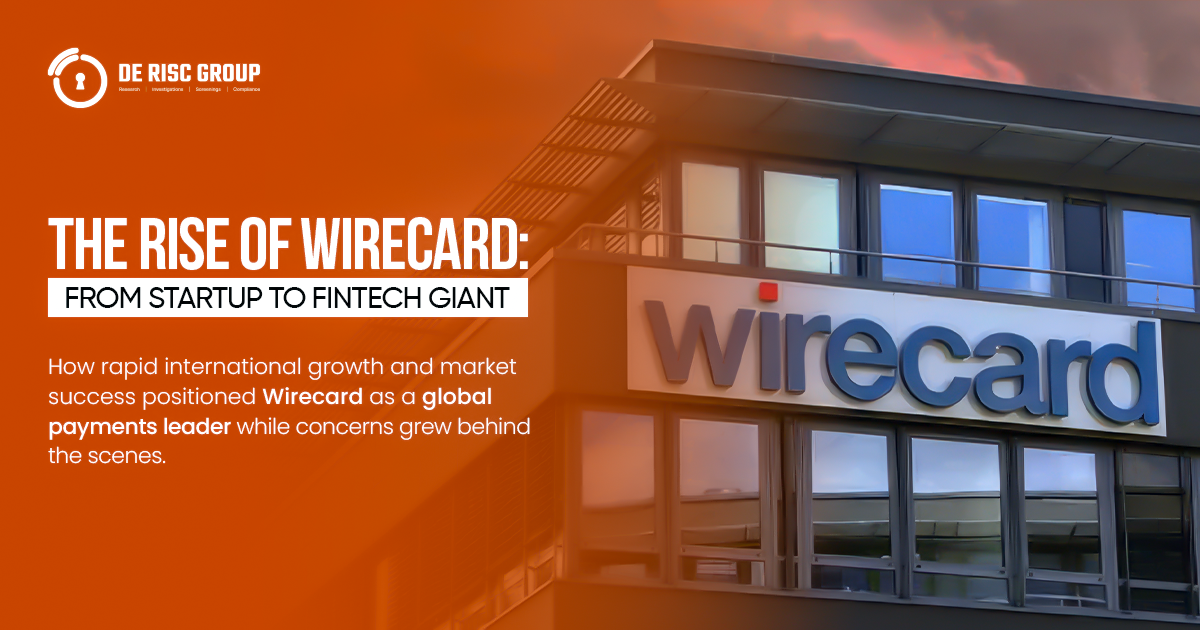
Founded in Germany in 1999, Wirecard began as a payment processing company focused on supporting online businesses. As digital payments expanded globally, the company positioned itself as a technology-driven alternative to traditional financial institutions.
Over the years, Wirecard expanded rapidly through international growth and acquisitions, presenting itself as a global leader in digital payments.
The company’s growth attracted significant attention from investors and financial markets. In 2018, Wirecard became part of Germany’s DAX index, replacing Commerzbank and joining the country’s largest publicly traded companies.
At its peak, Wirecard was valued at billions of euros and was viewed as a symbol of Germany’s ability to produce successful technology companies.
However, behind this success story were growing concerns about the company’s financial reporting and business practices.
Why the World Trusted Wirecard
The reason Wirecard’s collapse was so significant is because the company appeared credible to many external stakeholders.
Several factors contributed to this confidence:
Strong Market Reputation
Wirecard presented itself as an innovative fintech company operating in a rapidly growing industry. Its partnerships, international expansion, and stock market performance created an image of stability.
Reported Financial Success
The company consistently reported strong revenue growth and profitability, making it attractive to investors and business partners.
Global Operations
Wirecard operated across multiple countries and worked with international clients, creating the impression of a mature and established organization. However, a successful public image does not always represent the complete picture. For businesses conducting due diligence, this is one of the most important lessons: A recognizable name does not eliminate risk. Even established organizations require independent verification.
The Warning Signs Before the Collapse
Concerns about Wirecard did not appear overnight.
Several years before the collapse, journalists, analysts, and market observers raised questions regarding the company’s accounting practices and certain overseas operations.
Investigative reporting by the Financial Times highlighted concerns related to Wirecard’s Asian operations and financial reporting. The company repeatedly rejected allegations and defended its practices.
These events demonstrated an important risk management principle:
Warning signs often appear before a crisis occurs.
Organizations that actively monitor potential partners should pay attention to indicators such as:
- Negative media coverage
- Unusual financial patterns
- Complex corporate structures
- Lack of transparency
- Regulatory concerns
- Inconsistencies in company information
A single warning sign does not automatically mean a business relationship should end. However, it should trigger deeper investigation.
The €1.9 Billion Mystery
In June 2020, Wirecard announced that approximately €1.9 billion reported as being held in trustee accounts could not be verified.
The company initially stated that the missing funds represented around one-quarter of its reported balance sheet. Shortly afterward, Wirecard acknowledged that the funds likely did not exist.
The revelation caused immediate consequences:
- Wirecard’s share price collapsed.
- The company’s CEO resigned.
- Criminal investigations began.
- The company filed for insolvency.
- Investors and business partners faced significant losses.
The scandal became a global example of how failures in transparency, oversight, and verification can create enormous consequences.
The Global Impact of the Scandal
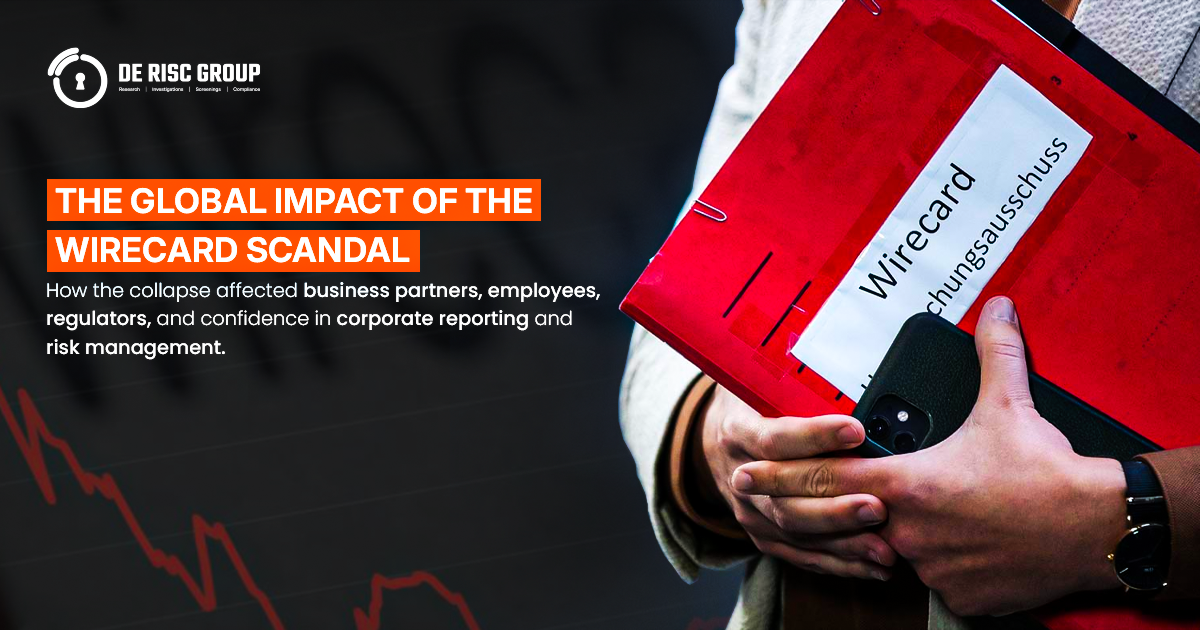
The Wirecard collapse affected far more than investors.
Impact on Business Partners
Companies relying on Wirecard’s payment services faced uncertainty and operational challenges.
Impact on Employees
Thousands of employees worldwide were affected as the company entered insolvency proceedings.
Impact on Regulators
The scandal raised questions about Germany’s financial supervision framework and corporate oversight mechanisms.
Impact on Trust
Perhaps the biggest impact was the damage to confidence in corporate reporting and risk management systems. The case demonstrated that organizations cannot rely only on reputation, financial statements, or external appearances when evaluating business relationships.
Five Due Diligence Lessons Businesses Should Learn
1. Verify Information Beyond Public Reputation
A company’s size, market position, or popularity should not replace independent verification.
Effective due diligence requires reviewing:
- Corporate ownership
- Financial information
- Legal history
- Regulatory records
- Business relationships
- Public reputation
2. Transparency Is a Critical Risk Indicator
Organizations should understand who controls the companies they work with.
Important questions include:
- Who are the beneficial owners?
- Where does the company operate?
- Are ownership structures clear?
- Are business activities consistent with reported information?
A lack of transparency can increase exposure to financial and compliance risks.
3. Continuous Monitoring Matters
Due diligence should not end after onboarding.
Business conditions change. Companies can experience:
- Financial difficulties
- Regulatory investigations
- Leadership changes
- Legal disputes
- Reputation issues
Continuous monitoring allows organizations to identify new risks before they become major problems.
4. Adverse Media Can Reveal Important Risks
Investigative journalism, regulatory announcements, and credible public reporting can provide valuable risk indicators.
Adverse media screening helps organizations identify potential concerns related to:
- Fraud allegations
- Corruption
- Financial misconduct
- Regulatory violations
- Reputation risks
5. Third-Party Risk Is Business Risk
Every supplier, vendor, and partner creates a connection between their actions and your organization’s reputation.
A failure by a third party can result in:
- Financial losses
- Compliance penalties
- Operational disruption
- Customer trust issues
Managing third-party risk should therefore be a strategic priority.
How Third-Party Due Diligence Could Have Helped Identify Risks
While no due diligence process can guarantee the prevention of fraud, a comprehensive risk assessment approach helps organizations make better-informed decisions.
A strong third-party due diligence process may include:
Corporate Verification
Confirming company registration, ownership structures, and operational details.
Financial Risk Assessment
Reviewing financial indicators, stability, and potential concerns.
Adverse Media Screening
Monitoring public information for reputation and compliance risks.
Litigation and Regulatory Checks
Identifying legal disputes, enforcement actions, or regulatory concerns.
Ongoing Monitoring
Tracking changes after onboarding to identify emerging risks.
The goal is not to eliminate every possible risk, it is to identify concerns early enough to make informed decisions.
Building a Stronger Risk Management Strategy
Modern businesses operate through interconnected networks of vendors, suppliers, and partners.
This creates opportunities for growth, but also increases exposure.
Organizations should consider adopting a risk-based approach that:
- Identifies high-risk relationships
- Applies appropriate screening levels
- Maintains updated records
- Reviews relationships periodically
- Uses reliable intelligence sources
A proactive approach allows businesses to move from reactive problem-solving to preventative risk management.
How DE RISC Group Helps Organizations Reduce Third-Party Risk
The Wirecard scandal highlights a critical business lesson:
Knowing who you work with is just as important as knowing what you sell.
DE RISC Group helps organizations make informed decisions through comprehensive risk intelligence solutions, including:
- Third-Party Due Diligence
- Market Intelligence
- Corporate Investigations
- Adverse Media Screening
- Background Screening
- Identity Verification
- Supply Chain Risk Assessments
- Continuous Monitoring
By combining reliable information with structured risk assessment, organizations can strengthen compliance programs, improve decision-making, and build safer business relationships.
Key Takeaways
The Wirecard collapse was not simply a financial failure, it was a lesson in the importance of verification, transparency, and continuous risk management.
Businesses should remember:
- Reputation does not replace due diligence.
- Financial information must be independently assessed.
- Third-party risks can directly impact your organization.
- Continuous monitoring is essential in a changing business environment.
- Early risk detection enables better decisions.
In today’s interconnected economy, due diligence is no longer optional, it is a foundation for responsible business growth.
Frequently Asked Questions
What was the Wirecard scandal?
The Wirecard scandal involved the collapse of German fintech company Wirecard after approximately €1.9 billion in reported trust account funds could not be verified in June 2020.
Why is Wirecard relevant to third-party due diligence?
The case demonstrates how insufficient verification, limited transparency, and weak oversight can expose businesses and investors to significant risks.
What is third-party due diligence?
Third-party due diligence is the process of evaluating external organizations such as suppliers, vendors, contractors, and business partners to identify potential financial, legal, compliance, and reputational risks.
Can due diligence prevent fraud?
No process can completely eliminate risk, but effective due diligence helps organizations identify warning signs and make better-informed decisions.
How often should third-party due diligence be conducted?
Due diligence should be performed before onboarding and updated periodically based on the level of risk associated with each relationship.