A Certificate Isn't Always a License: Understanding Professional Qualifications, Certifications and Registration
A professional certificate may look impressive on a CV, but what exactly does it allow someone to do?
A qualification can show that an individual has completed a course or achieved a recognized level of education. A certification may demonstrate specialized knowledge or competence. Registration can confirm that a person is listed with a professional body. A license, however, may be what legally permits someone to practice a particular profession. These terms are often used interchangeably, but they do not always mean the same thing.
For employers, understanding the difference matters. Hiring someone based on a credential without confirming what it actually represents can create compliance issues, reputational risks and even operational consequences.This is why professional qualification and membership checks should go beyond simply asking whether a certificate exists. The real question is whether the credential is genuine, relevant, current and appropriate for the role.
Table of Contents
- Why Professional Credentials Need More Than a Visual Check
- Qualification, Certification, Registration and Licence: What Is the Difference?
- When a Certificate Does Not Mean Someone Can Practise
- What Employers Should Verify
- The Risk of Outdated or Misrepresented Credentials
- Why Industry-Specific Verification Matters
- From Credential Checking to Professional Confidence
- How DE RISC Supports Professional Qualification Checks
- Key Takeaways
- FAQs
Why Professional Credentials Need More Than a Visual Check
A certificate can provide evidence that someone completed a particular programme, passed an examination or met a specific standard.But a document alone does not always tell the full story. An employee may hold a qualification but no longer meet the requirements of a professional body. A certification may have expired. A membership may have lapsed. A registration may apply only in a particular jurisdiction. In some professions, additional licensing may be required before an individual can legally practise. This creates an important distinction between holding a credential and being authorised or professionally recognised to use it. For employers, verification should therefore establish more than whether the candidate has presented a document. It should establish what the credential represents and whether it is still valid.
Qualification, Certification, Registration and Licence: What Is the Difference?
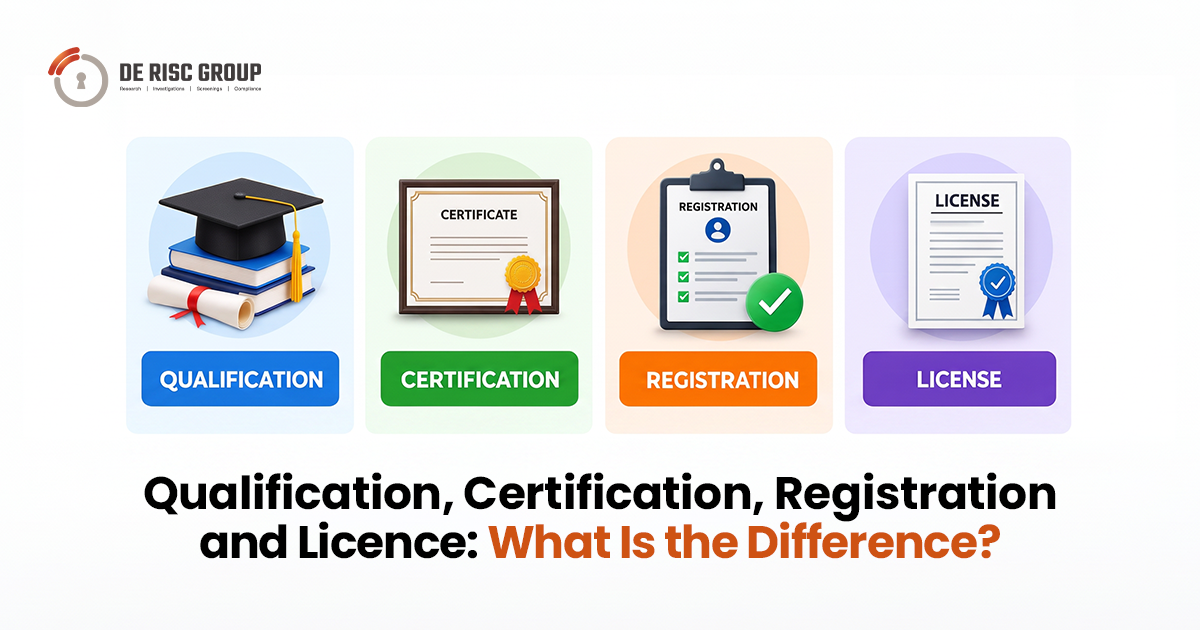 Although the terms can overlap, they generally refer to different forms of professional recognition.
Professional Qualification
A qualification usually demonstrates that an individual has completed a recognised programme of education or training. Depending on the profession, this could include a degree, diploma, vocational qualification or professional examination.
Professional Certification
Certification generally confirms that an individual has met defined requirements established by a professional organisation, certifying body or industry authority. Some certifications are valid indefinitely, while others require renewal or continuing professional development.
Professional Registration
Registration means an individual is formally recorded with a relevant professional body or regulatory organisation. Registration may demonstrate that the individual has met particular professional requirements, but the exact significance depends on the profession and jurisdiction.
Professional Licence
A licence is generally connected to legal permission to practise a regulated profession. For certain occupations, having the appropriate qualification is not enough. The individual may also need an active licence or authorisation from the relevant authority. Understanding these distinctions helps employers ask the right verification questions.
When a Certificate Does Not Mean Someone Can Practice
One of the most important lessons for employers is simple: a credential can prove achievement without proving current professional authority. Consider a role where practising legally requires both a professional qualification and active registration. A candidate may genuinely possess the required qualification. However, if their registration has expired or they are not currently authorised to practise, the qualification alone does not provide the complete picture. The same issue can arise with certifications. A candidate may have successfully completed a certification several years ago, but the certification may now require renewal. In another situation, a professional membership may have been valid previously but may no longer be active. This is why professional verification should consider status, validity and relevance, rather than focusing only on the existence of a certificate.
What Employers Should Verify
A strong professional qualification check should answer several practical questions.
Is the credential genuine?
The first step is confirming that the qualification or certification was actually issued by the stated institution or professional body.
Does it belong to the candidate?
Names, dates and identifying details should correspond with the individual being screened.
Is it still valid?
Where credentials expire, require renewal or depend on active membership, employers should establish the current status.
Is it relevant to the role?
A genuine qualification does not automatically mean that it meets the requirements of a particular position. Employers should consider whether the credential provides the knowledge, professional standing or authorisation required for the role.
Is additional registration required?
For regulated professions, employers should determine whether the candidate also needs active registration, licensing or another form of professional authorisation. These checks help move verification from “Does the candidate have a certificate?” to “Does this credential support the candidate's professional eligibility for this role?”
The Risk of Outdated or Misrepresented Credentials
Professional credentials can become outdated in several ways. A qualification itself may remain genuine, while the individual's professional registration has expired. A certification may require periodic renewal. A membership may no longer be active. Alternatively, a candidate may present a legitimate credential in a way that suggests a level of professional authority it does not actually provide. There is also the possibility of completely falsified qualifications. For employers, these situations can create more than an HR problem. Depending on the role and industry, they can affect regulatory compliance, customer safety, professional standards and organizational reputation. The risk becomes greater when employers rely entirely on copies of certificates supplied by candidates rather than verifying credentials with appropriate sources.
Why Industry-Specific Verification Matters
 Professional requirements are rarely identical across industries. A qualification that is sufficient for one position may not meet the requirements of another. Different professional bodies may also have their own membership, certification, renewal or registration requirements.This makes a standardised “one check fits all” approach less effective. Industry-specific verification considers the requirements that actually apply to the role. It can help employers determine which professional bodies, institutions or regulatory sources should be contacted and which details need to be confirmed. This is particularly important when recruiting internationally, where professional titles, qualification structures and regulatory requirements can vary between jurisdictions.
From Credential Checking to Professional Confidence
The value of professional qualification verification is not simply in identifying fraudulent documents. It helps employers make better-informed hiring decisions. A thorough check can provide greater confidence that an individual's stated qualifications are accurate, their professional memberships are genuine and their credentials remain relevant to the position. It can also help identify discrepancies before they become operational or compliance problems. For organisations recruiting into specialist roles, this additional layer of verification can support a more consistent and defensible hiring process.
How DE RISC Supports Professional Qualification Checks
At DE RISC Group, our Professional Qualification and Membership Check service is designed to help employers verify the professional credentials presented by candidates.
We review qualifications and professional memberships for accuracy and authenticity, while considering the standards relevant to the candidate's industry and role. Our verification approach can help establish whether credentials are genuine, whether professional memberships are valid and whether the information provided by the candidate corresponds with the relevant professional records. Because professional verification can involve sensitive personal and career information, checks are handled confidentially and with discretion. For organisations hiring across different industries or jurisdictions, this tailored approach can provide a clearer picture of professional standing before a hiring decision is finalised.
Key Takeaways
- A professional qualification, certification, registration and licence are not necessarily the same thing.
- Holding a genuine certificate does not always mean an individual is currently authorised to practise.
- Employers should verify the authenticity, ownership, validity and relevance of professional credentials.
- Some professions require additional registration or licensing beyond educational qualifications.
- Credentials can become outdated even when the original qualification remains genuine.
- Industry-specific requirements make tailored verification more valuable than a basic document check.
- Professional qualification checks can help reduce compliance, reputational and hiring risks.
- Confidential verification gives employers greater confidence while protecting candidate information.
FAQs
What is a professional qualification check?
A professional qualification check verifies whether a candidate's stated qualification or professional credential is genuine and accurately represented.
Is a certificate the same as a professional licence?
No. A certificate may demonstrate that someone completed training or achieved a particular standard, while a licence may provide legal permission to practise a regulated profession.
Why should employers verify professional memberships?
Professional memberships can demonstrate current affiliation or professional standing, but membership status may change. Verification can establish whether the membership is genuine and currently active.
Can a qualification be genuine but still not be enough for a job?
Yes. A qualification can be completely genuine but may not meet the specific requirements of a role. Some positions also require active registration, licensing or additional certification.
Does professional qualification verification matter for international hiring?
Yes. Professional titles, qualifications, registration systems and licensing requirements can differ between countries. International verification can help employers understand whether credentials meet the requirements relevant to the position and jurisdiction.
How does professional qualification checking protect employers?
It helps employers identify inaccurate, outdated or misrepresented credentials before they affect hiring decisions, compliance obligations or professional standards.
Final Thoughts
A certificate can tell you that someone achieved something. It does not always tell you whether they are currently qualified, registered or authorised to perform a particular professional role. That distinction matters. For employers, effective credential verification means looking beyond the document and understanding what the credential actually represents. With the right checks in place, organisations can hire with greater confidence in both the expertise and professional standing of their people.
DE RISC Group provides tailored Professional Qualification and Membership Checks to help employers verify credentials accurately, confidentially and in line with relevant professional standards.