One Passport, Multiple Risks: The Overlooked Side of Identity Verification
A passport is widely recognised as proof of identity, but receiving a copy of one does not automatically mean that a person's identity has been verified. A document may appear genuine while containing altered information. In other cases, the document itself may be authentic, but the person presenting it may not be its rightful holder. These situations create different challenges for organisations that rely on identity documents to make hiring, onboarding or international business decisions.
The consequences can extend beyond a single verification error. Weak identity checks may expose organizations to impersonation, fraudulent applications, compliance concerns and reputational damage. As businesses increasingly recruit internationally and work with people across borders, verifying identity requires more than collecting documents and checking whether the details look correct.
The real challenge is establishing whether the document is authentic, whether it belongs to the person presenting it, and whether the information can be relied upon.
Table of Contents
- Why One Passport Can Present Multiple Risks
- When a Genuine-Looking Document Cannot Be Trusted
- The Difference Between Document Fraud and Identity Misuse
- Why Basic Passport Checks May Fall Short
- What a Thorough Passport Verification Process Should Examine
- Why International Verification Adds Complexity
- The Business Consequences of Weak Identity Checks
- Building a Stronger Identity Verification Process
- How DE RISC Group Supports Passport Verification
- Key Takeaways
- FAQs
1. Why One Passport Can Present Multiple Risks
Passports are used in many situations where establishing identity is essential. Employers may request them during international recruitment, while organisations may use passport details as part of onboarding, due diligence or other identity verification procedures. However, the risks associated with a passport are not limited to whether the document is genuine. A fraudulent document can contain altered personal details. A legitimate passport may be misused by someone other than its rightful holder. Information may also be entered incorrectly during an application or screening process. Each situation requires a different response.
For example, confirming that a passport was issued by the relevant authority does not, by itself, establish that the person presenting it is the rightful holder. Similarly, matching a name and date of birth against an application does not necessarily prove that the document is authentic. Understanding these distinctions helps organisations avoid treating identity verification as a simple administrative task.
2. When a Genuine-Looking Document Cannot Be Trusted
Modern identity documents include security features designed to make counterfeiting and alteration more difficult. However, a visual inspection alone may not be enough to establish authenticity.
Images and scanned copies can conceal certain details, while alterations may not be obvious to someone unfamiliar with the document's security features. Poor image quality can also make important information difficult to assess.This is particularly relevant when organisations receive documents remotely. A recruiter, for instance, may receive a passport scan from an overseas applicant without physically handling the original document. Although the information may appear consistent, the recruiter still needs an appropriate way to assess its authenticity and connection to the applicant.
This does not mean every unusual document is fraudulent. Damaged documents, image quality issues and legitimate differences in document formats can create discrepancies too. The important point is that appearance alone should not be treated as conclusive evidence of authenticity. Where concerns arise, additional verification may be necessary.
3. The Difference Between Document Fraud and Identity Misuse
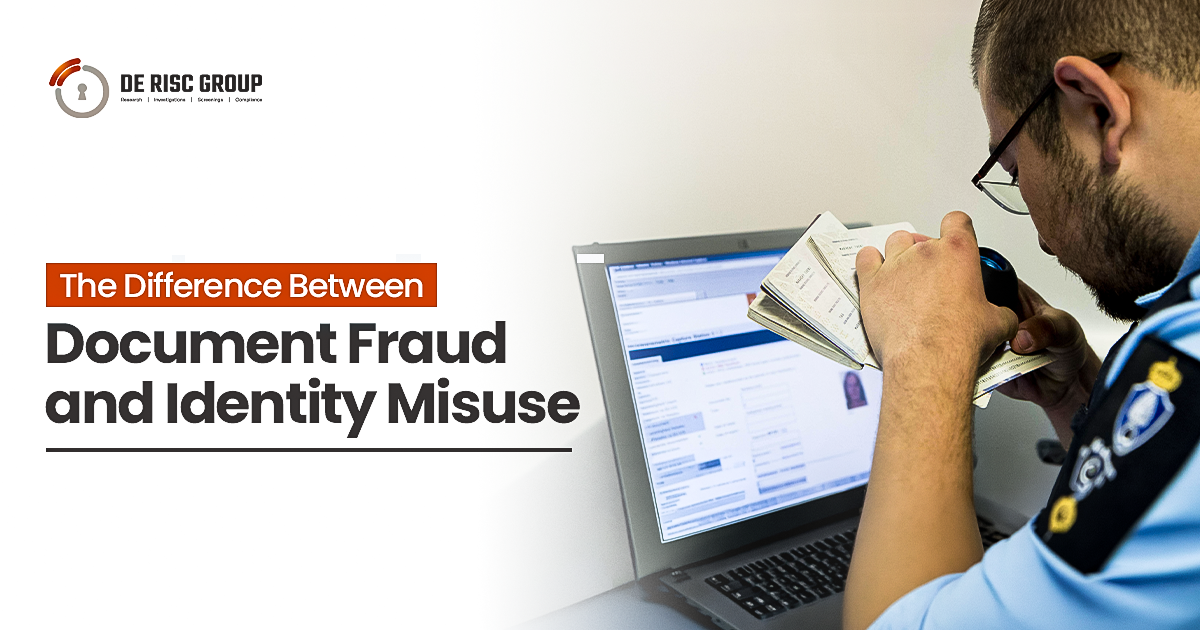
Understanding the type of risk involved helps determine which checks are appropriate.
- Document Fraud: Document fraud involves a document that has been falsified, altered or otherwise misrepresented. In passport screening, this may include manipulated personal details or a counterfeit document designed to resemble an authentic passport. Verification may involve examining relevant security features, checking document information and using appropriate authentication methods.
- Identity Misuse: Identity misuse occurs when someone's identity information is used improperly. For example, an individual may attempt to present another person's genuine passport as their own. In this situation, the document itself may be authentic. The concern is whether the person presenting it is the legitimate holder.
- Information Discrepancies: Not every mismatch indicates fraud. Differences in name spelling, transliteration, document formatting or data entry can occur, especially in cross-border processes. These discrepancies should be reviewed carefully rather than automatically treated as evidence of misconduct. Distinguishing between these situations is essential because document authentication and identity matching address related but different questions.
4. Why Basic Passport Checks May Fall Short
A basic check often involves collecting a passport copy and comparing its details with the information provided by the individual. Although this can help identify obvious inconsistencies, it may not establish whether the document is authentic or whether the person presenting it is the rightful holder.
There are several reasons for this.
First, a visual review may not detect sophisticated alterations. Second, the screening process may rely entirely on candidate-provided information without consulting appropriate verification sources. Third, organisations may overlook discrepancies because they are focused on completing onboarding quickly.
Another challenge is treating a successful check as permanent confirmation. Identity information and document validity can change, while the purpose of verification may differ depending on the role or transaction.
A stronger approach considers the level of risk involved and determines whether additional authentication or independent checks are necessary.
5. What a Thorough Passport Verification Process Should Examine
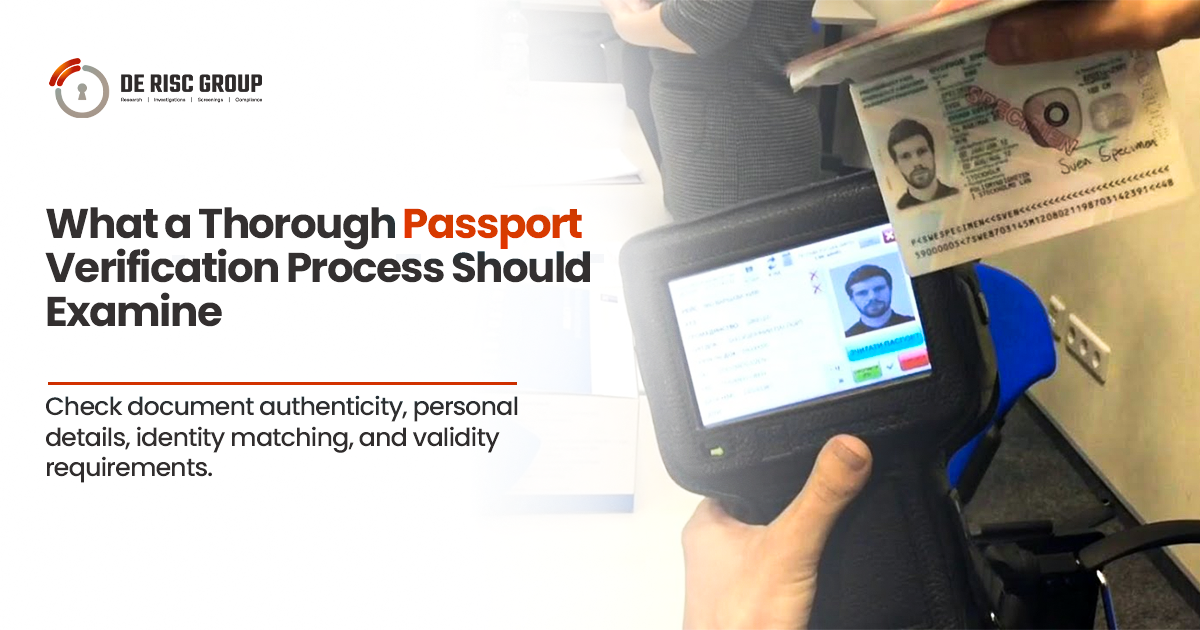
An effective process should establish what can reasonably be confirmed and identify any unresolved concerns.
- Document Authenticity: The first consideration is whether the passport appears genuine and whether its details and security features can be assessed using appropriate methods. Depending on the circumstances, this may involve document examination tools or verification through suitable sources.
- Consistency of Personal Details: Names, dates of birth, passport numbers and other relevant information should be checked against the details supplied during the application or onboarding process. Differences should be investigated proportionately, taking into account legitimate variations in spelling and formatting.
- Identity Matching: Where appropriate and legally permitted, organisations should establish whether the document corresponds to the individual undergoing verification. This is a separate consideration from confirming that the passport itself is genuine.
- Validity and Relevant Requirements: The passport's validity should be considered in relation to the purpose of the check. If the organisation needs to establish eligibility to travel, work or meet a particular regulatory requirement, it must also identify the rules that apply to that situation. A valid passport alone does not automatically establish permission to work in another country or satisfy every immigration requirement. Together, these checks provide a more reliable basis for identity-related decisions than simply collecting a copy of a document.
6. Why International Verification Adds Complexity
Cross-border screening introduces additional challenges because countries use different document formats, languages, naming conventions and verification procedures. A name may be transliterated differently across records. Some authorities may offer accessible verification channels, while others may have limited public access to passport information.
Organisations must also consider data protection requirements, lawful access to information and the appropriate handling of sensitive identity documents. For this reason, international verification should not rely on a single universal process. The methods used should reflect the document, the jurisdiction, the purpose of screening and the level of risk. It is equally important to recognise the limits of available information. If an independent source cannot confirm a detail, the result should not be presented as though every aspect of the document has been verified. Clear reporting helps employers understand what has been established, what remains uncertain and whether further checks are appropriate.
7. The Business Consequences of Weak Identity Checks
Identity verification is often treated as an early administrative step, but weaknesses at this stage can affect later decisions. In recruitment, an identity mismatch may complicate employment checks or create uncertainty about the person being hired. In business onboarding, unreliable identity information can undermine subsequent due diligence. Weak checks may also increase exposure to impersonation, fraudulent applications and internal process failures. Depending on the circumstances, they can create regulatory or contractual concerns and damage stakeholder confidence.
These risks are particularly relevant when organisations operate internationally or handle sensitive information. However, an effective verification process is not about treating every applicant with suspicion. It is about applying consistent, proportionate checks so that decisions are based on reliable information. When discrepancies are identified, organisations should follow a fair review process, allow legitimate explanations and avoid making unsupported assumptions about an individual's conduct.
8. Building a Stronger Identity Verification Process
A reliable identity verification process begins with clear requirements.
Organisations should determine why a passport is needed, what information must be confirmed and which legal or regulatory requirements apply. This helps ensure that checks are relevant rather than unnecessarily intrusive. They should then use appropriate methods to examine document authenticity and compare relevant details. Where concerns remain, further verification may be required before a decision is finalised. Confidentiality is equally important. Passport documents contain sensitive personal information, so access should be restricted to authorised personnel and records should be retained only for as long as necessary under applicable requirements.
Finally, verification outcomes should be documented clearly. A confirmed match, an unresolved discrepancy and an inconclusive result are not interchangeable. Recording these distinctions helps decision-makers understand the evidence without overstating what a check has established.
9. How DE RISC Group Supports Passport Verification
At DE RISC Group, our Passport Verification service helps organisations assess the authenticity of passport documents and verify relevant identity information. Our approach includes detailed checks using appropriate international databases and document verification methods to help identify potential discrepancies and signs of fraudulent documentation.
For organisations recruiting internationally or conducting cross-border screening, passport verification can form part of a broader background screening process. It can complement other checks, including identity verification, employment and education verification, and relevant due diligence, depending on the purpose of the screening. We also recognise the importance of handling sensitive information confidentially and with discretion. The aim is to help organisations make better-informed decisions by establishing what can be verified, identifying potential concerns and reducing reliance on unverified identity documents.
Key Takeaways
- A passport copy does not automatically establish a person's identity or prove that a document is authentic.
- Document fraud, identity misuse and ordinary information discrepancies are different issues that require careful assessment.
- Visual inspection alone may not identify every alteration or authentication concern.
- Passport verification should consider document authenticity, personal details, identity matching and relevant validity requirements.
- International screening can involve differences in languages, document formats, verification access and legal requirements.
- A valid passport does not automatically establish permission to work or meet every immigration requirement.
- Clear reporting, proportionate checks and confidential data handling strengthen identity verification.
- DE RISC Group's Passport Verification service helps organisations assess passport authenticity and manage identity-related risks.
FAQs
What is passport verification?
Passport verification is the process of assessing whether a passport document is authentic and whether its relevant details correspond with the information being verified.
Can a genuine passport be used for identity fraud?
Yes. An authentic passport may be misused by someone other than its rightful holder. Document authenticity and identity matching are therefore separate considerations.
Why is checking a passport copy not always enough?
A copy may not show every relevant security feature, and visual inspection may not establish whether the document is genuine. Additional verification may be appropriate depending on the circumstances.
Does a valid passport prove that someone can work internationally?
No. A valid passport establishes a form of identity and nationality documentation, but permission to work depends on the applicable immigration rules and other requirements.
Why is passport verification important for international recruitment?
It helps employers assess identity information and document authenticity when recruiting across borders, where document formats and verification procedures can vary.
How does DE RISC Group help with passport verification?
DE RISC Group provides Passport Verification services using appropriate international databases and document verification methods to help organisations identify discrepancies and potential document fraud.